FREEDOM CORNER
Philadelphia, Pennsylvania-Capital of the United States – May 1787: America had won its war for independence four years prior, but the articles of confederation, which had bound the 13 original colonies as United States during the revolution were failing. A group of 55 delegates from 12 of the 13 states (Rhode Island did not participate) met once again in Philadelphia to renegotiate the terms of a new government. What was forged during those sweltering summer months was a completely new Constitution; one consisting of three separate branches of government meant to operate within a system of checks and balances to one another. It would take another year for the majority of the states to ratify, and an additional four years for the Bill of Rights to be added. This is the second in a series exploring the origins of those branches and how they have evolved in the 238 years since their inception.
Article I: The Legislative Branch
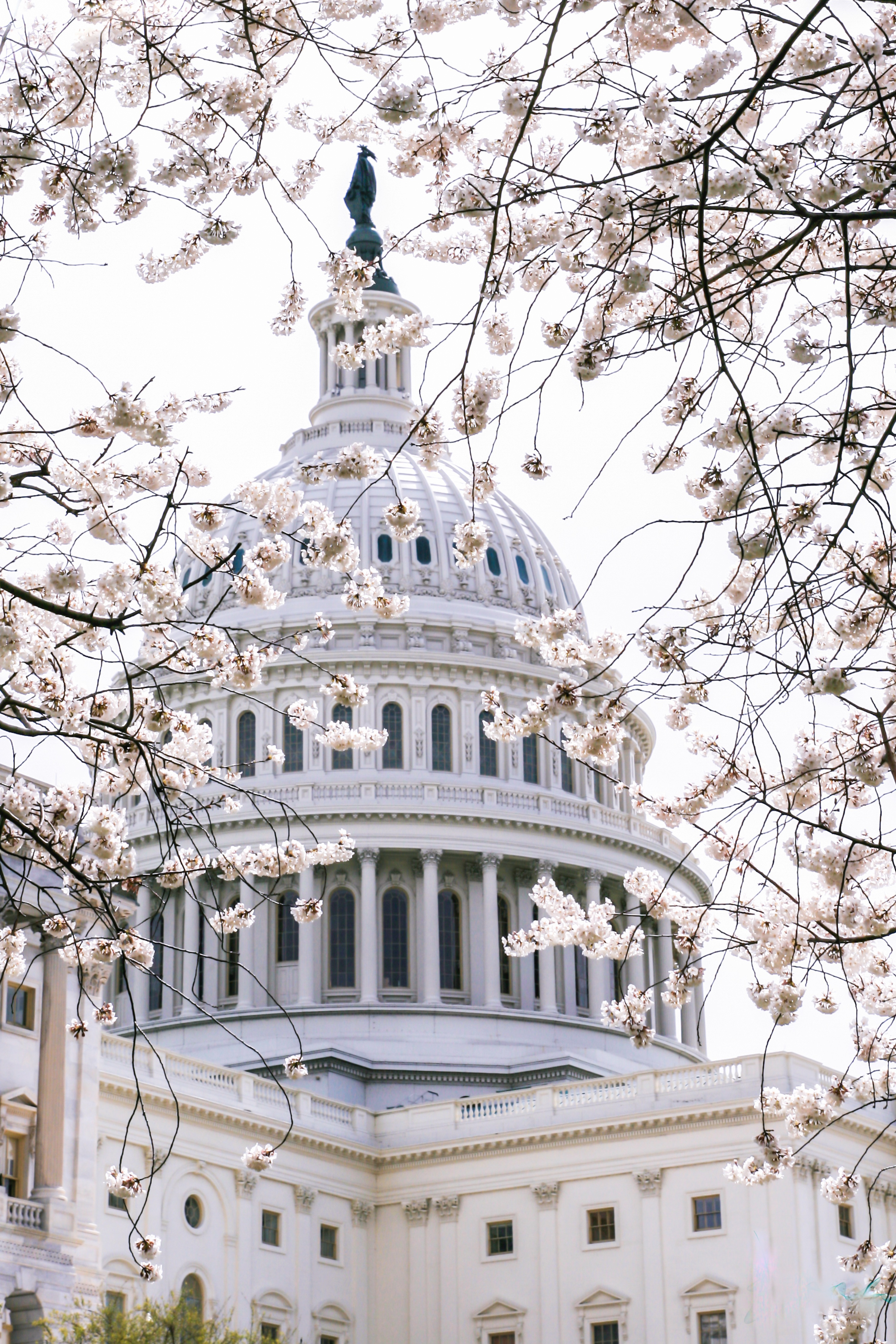
Comprising more than half of the original Constitution, Article I lays out very specific terms for what Congress’s role will be in this new government.
Steve Livengood, Public Historian at the U.S. Capitol Historical Society, said the precepts set forth in the Constitution were heavily influenced by the enlightenment movement that was sweeping throughout Europe at the time of our nation’s founding.
“The success of a government should be measured by its utility for ordinary people and not just the rich and the powerful,” he said. “They knew the need for a government, but they wanted to be able to control it, above all in the laying of taxes, so they gave that power to an elected body.”
While “enlightenment” was gaining popularity throughout the great empires of Europe, the formation of the United States came at just the right time for our founders to implement those ideals across an entire nation right from the start. The primary tenet of the legislative body is its authority to pass laws and control the funding that facilitates them.
“By putting that squarely under the Congress’s responsibility… it really gave them this ‘first mover’ advantage that is still very foundational to how legislation and policy changes happen today,” explained, SoRelle Wyckoff Gaynor, assistant professor of public policy at the University of Virginia.
And by making the body accountable to the general public through an electoral process, Congress had set an entirely new standard for representative government throughout the world.
“They had just won this sort of people-led movement; (the Revolutionary War) was citizen-led in many ways. I would imagine that kind of spirit came as part of it,” Gaynor posited. “That they came to this agreement of,… ‘I will write a constitution where I could potentially lose my job every two years in an election,’ It is an incredible document.”
Of course, it would take another 82 years for Black men to receive the right to vote in 1869, and an additional 51 years for women to be able to vote in 1920; but the foundation which allowed for such progress was instilled at the very beginning.
Just how much representative authority should each state have versus the commanding authority of the federal government was at the center of the debate for the legislature. Their solution was to split Congress into two chambers; the House of Representatives, which would be elected every two years and whose number would be based on a state’s population; and the Senate, which would be made up of just two representatives from each state, appointed by that state’s legislature. It wasn’t until the 17th Amendment in 1913 that the Senate came under general election. In 1929, the Reapportionment Act capped the number of House representatives at 435.
Not every compromise was spelled out within the Constitution; however, political parties have become a prominent part of our governmental system, likely much to the chagrin of our founding fathers.
“In fact, the authors of the Constitution were trying to avoid parties,” Livengood said. “They did not want that kind of government because they could see that the parties tended to value loyalty above the good of the ordinary citizens.”
Partisanism has shaped and divided our understanding of American politics, but the concept doesn’t exist anywhere in the Constitution. Even as the document was being written, factions began to split among the framers. “Federalists,” as they called themselves, favored a more centralized form of government. The “Antifederalists” wanted more power given to individual states. These proto-parties would form the basis for what would become our two-party system. Ironically, when the new Republican party was formed in 1854, it was the more radical, left-leaning group.
“The ideology of the party doesn’t really mean a whole lot, except at certain periods when it becomes an organizing principal. But then it won’t stay that way,” Livengood said. “It comes from when a party goes into the minority, what they try to do is gather people who feel left out in the other party.”
The America for which the Constitution was written in 1787, was a very different type of country than it is today, both in terms of territorial size and global standing. As our nation has expanded, Congress has had to delegate some of its responsibilities.
“That’s when you see things like presidents take advantage of this lack of capacity and do things like FDR and Trump and pass a bunch of executive orders, or more quietly, but just as significantly, administrative agencies grow,” Gaynor explained. “It’s one thing to shirk regulatory details, but giving away budget control, authorizing legislation after an action has been made by a president, is a dangerous road to go down.”
Whether it’s a bug or a feature of the Constitution, the Legislative Branch’s authority is only as strong as the individuals who make up Congress.
“That’s why our elections are so important and why we get so bitter about them is that that’s the central point,” Livengood said. “This power is central to our system and that’s the legitimacy. The only thing that really counts is the election.”