Voters Reported Worries About the Economy, Gas Prices, and Election Interference in Run-up to Election Day
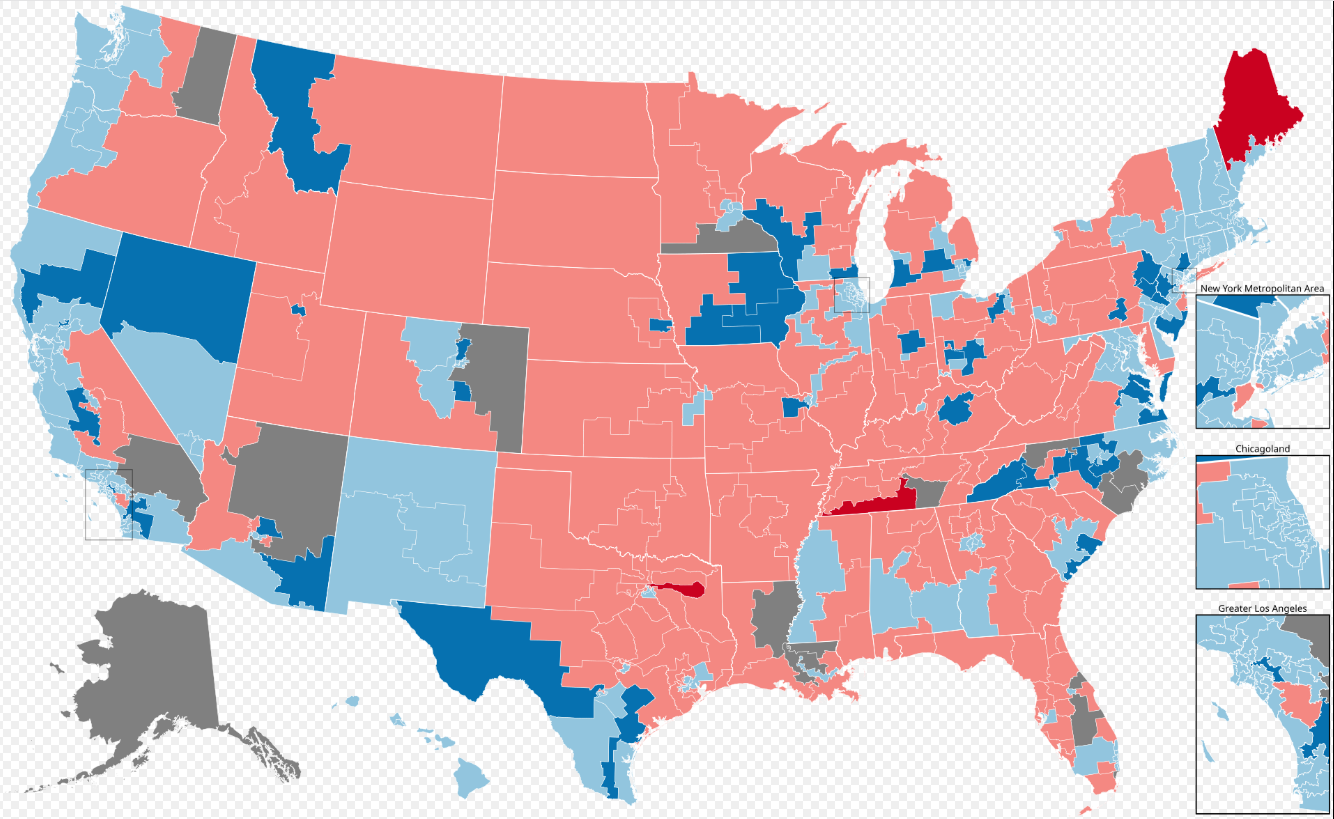
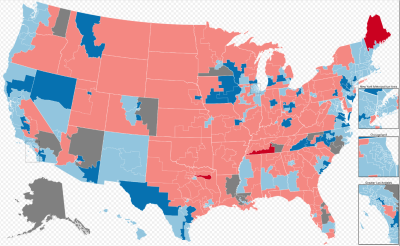
Results of the 2026 United States House of Representatives
As Americans prepared to take to the polls in November, they were animated by issues in their communities and states, in addition to the overall state of the country. National polling from the Pew Research Center, the University of Chicago’s National Opinion Research Center (NORC), and Gallup, Inc. revealed matters most pressing to voters before Election Day.
There are enough C-SPAN clips of elected leaders in America using the James Carvile coined political axiom “it’s the economy, stupid” to fill the runtime of several epics on the silver screen. During this cycle, Americans seemed to champion that timeless sentiment as a front-and center priority in their minds, according to recent polling from the Pew Research Center. The University of Chicago’s NORC found 85% of respondents to one of its latest polls viewed the economy as one of the most important issues in the country.
A July poll showed the economy, overall, was chief among top issues voters wanted to hear about from candidates running for Congress — polling at 29%, according to Pew. Key economic indicators suggested a muddied picture.
A snapshot of the country’s gross domestic product (GDP), which the U.S. Bureau of Economic Analysis (BEA) describes as the most popular indicator of the nation’s overall economic health, showed some growth in the past two years. The latest report showed a 2.2% annualized increase of the nation’s GDP in the second quarter. That is in line with growth of 2.1% overall for 2025.
But that is not the only indicator of economic performance. Payroll growth, according to some analysts, is also a key factor in assessing the condition of a country’s financial health. The U.S. economy in October showed some trends that concerned some of the world’s largest credit authorities and watchdogs of the world’s wealth.
Most importantly, economists have noted that there is not enough breadth to the sectors of the economy that are growing their workforces. Mark Zandi, chief economist at Moody’s Analytics, said softness in the financial system is showing through the stagnation in hiring for most sectors and labor fields.
Primarily, Zandi told Goldman Sachs in an interview, monthly payroll growth has averaged around 40,000 jobs per month in the past year. That number lowers to almost zero when excluding the healthcare field. In addition to struggles in hiring, a key trend Zandi said he has observed is that workers are dropping out of the workforce altogether. On top of that, he added, wages are keeping pace with inflation, but without much real growth. The consumer price index (CPI), which measures inflation, is up about 3.7% from September 2025 to 2026, with perceived wage growth of 3.9% accompanying it.
Inflation and changes to the cost of living in the country not only affect overall trends nationwide, but they also shape consumer habits and perception of economic prosperity. Accordingly, the cost of living was second among the top issues in the minds of voters. Rising consumer prices —and the price of fuel specifically — are two of the top three issues named by voters in monthly polls produced by Gallup, with the other being “the economy in general.”
Grocery store prices have made up some of the most dramatic increases in cost for American families to budget. Between 2019 and 2024, food prices rose almost 30%. Then, from 2024-25, they rose almost 3%, and between September 2025 and 2026, that number came in at an additional 2.5%.
The price of gas remained another key worry for Americans, and it’s compounded by an accompanying issue: President Donald Trump’s war with Iran. The latter was cited by 64% of NORC poll respondents as a top issue leading up to Election Day. Brown University’s Climate Solutions lab calculated Americans had spent about $143 billion in additional fuel costs since the war with Iran began, as of Oct. 24.
The national average price for a gallon of gasoline on Feb. 28, the start of the conflict, was $2.98, compared to about $4.29 on Oct. 24, an increase of $1.31 per gallon in 238 days. According to the Library of Congress, the war with Iran contributed to higher energy prices primarily due to the off-and-on closure of the Strait of Hormuz, a key waterway in the Persian Gulf for the transit of natural gas, oil, and other commodities. Approximately 20% of the world's liquefied natural gas, primarily from Qatar, uses the Strait to reach global markets, the Library of Congress reports.
Election integrity weighed heavily the minds of American voters, too. A recent Gallup poll showed that two in three U.S. adults were concerned about political pressure in elections. The item asked by pollsters that drew the most concern from those surveyed was: “Political leaders pressuring election officials to change election outcomes.” That response drew concern from 67% of respondents. Another item registered as a concern for 52% of respondents: “People gathering near polling places in an attempt to intimidate voters or discourage voters from voting.”
The Brennan Justice Center created a timeline dating to January 2025 that details actions taken by President Trump that indicate some attempt at election influence. The events range from the 2025 pardon of the people who participated in the Jan. 6, 2021, U.S. Capitol riots to court cases that undermine state sovereignty over elections, and the appointment of government officials who deny the results of the 2020 presidential election. “The Trump administration has launched a concerted drive to undermine American elections,” the Brennan Center states. “These moves are unprecedented and, in some cases, illegal.”
The list of events is broken down into four categories: “Attempting to usurp control of elections,” “Threatening people who keep elections free and fair,” “Supporting people who undermine elections,” and “Reorienting the government away from voter protection.” More than two dozen courts have ruled against the Trump administration in election related cases, the Brennan Center has reported.
“Together, these actions form a concerted strategy to interfere with elections,” the Brennan Center stated.