FREEDOM CORNER
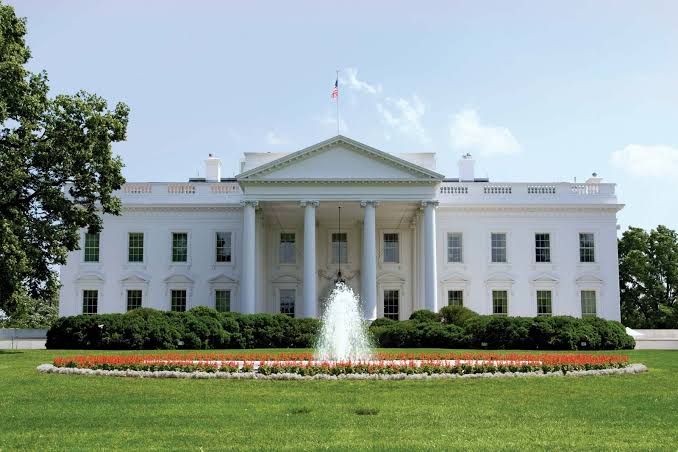
This is the third in a series of the three branches of government written in Constitution. The Executive Branch:
WASHINGTON D.C. – May 1787: America had won its war for independence four years prior, but the Articles of Confederation, which had bound the 13 original colonies as United States during the revolution, were failing. A group of 55 delegates from 12 of the 13 states (Rhode Island did not participate) met once again in Philadelphia to renegotiate the terms of a new government.
What was forged during those sweltering summer months was a completely new Constitution; one consisting of three separate branches of government meant to operate within a system of checks and balances to one another. It would take another year for the majority of the states to ratify and an additional four years for the Bill of Rights to be added.
This is the third article in a series exploring the origins of those branches and how they have evolved in the 238 years since their inception.
Article II: The Executive Branch
The first few years of American history were fraught with turmoil. Civil unrest and outright domestic rebellions sprouted from the uncertainty of how these 13 sovereign states would interact with one another now that they had achieved independence from Great Britain.
To address the need for a more holistic government, Congress had to concede that it would in fact benefit from a single head of state to speak on the entire nation’s behalf.
“As you can probably imagine, Americans of the founding generation were pretty worried about a super tyrannical government, because they had just rebelled against the king of England,” said Matthew Goetz, a senior historian with the White House Historical Association. “What powers to give the Executive Branch was one of the most heavily debated topics at the constitutional convention.”
Article II of the Constitution lays out those powers, but most importantly, expresses the powers which the other two branches would hold over the Executive Branch. Congress has the ability to limit a president’s authority up to the point where those limitations might infringe on the specific powers laid out in Article II; Congress can decide which of the president’s programs and policies to fund; and Congress has investigatory authority over the Executive Branch, as well as the authority to remove any member from office. How the president responds to such restraints can depend on the person in office.
It was the forgone conclusion that George Washington would become the first president, which gave the framers the confidence that executive powers would not be abused.
“’We would have perhaps limited the power more if we hadn’t had our eyes on George Washington as the first executive,’” Doug Bradburn, director of the George Washington Presidential Library at Mount Vernon, quoted one of the delegates from South Carolina as saying at the time. “The office of the Presidency is really created by Washington in a fundamental way.”
Washington set the stage for future presidents, knowing fully well that his handling of any ambiguity within the Constitution would set the standard for generations to come. A personal copy of the Constitution kept by Washington still exists today with handwritten notations.
Still, Washington had been elevated from being a war-time general, answering the directives of Congress, to an equal position of authority. He knew that he would need to exert some of that authority to ensure the office held meaning.
“When (people) think about, ‘oh, that president isn’t behaving presidentially,’ they are imagining in their heads some kind of standard of decorum, integrity, presence, and charisma that was established by George Washington,” Bradburn said.
The Constitution lists what a president can do but leaves room for interpretation as to how he does it.
“You presume that the bodies it established only have the powers that the document gives them,” said Julie Novkov, a professor of Political Science at the University at Albany. “But some of those powers are defined in fairly flexible ways.”
During the first half of our nation’s history, when executive powers were pushed, it mostly shifted more authority to the president and his inner circle. But by the turn of the 20th century, massive wealth and power discrepancies were causing extreme upheaval between the political elite and the working class.
The “progressive era” emerged as three consecutive presidents: Theodore Roosevelt (1901-1909); William Howard Taft (1909-1913); and Woodrow Willson (1913-1921). They focused their platforms on making major reforms in part by transferring some of their authority to new regulatory agencies. These new agencies could act independently from the direction of the president in the fulfillment of their duties but were still subject to congressional oversight.
“This (current) administration is sort of throwing that structure out and basically saying that all administrative agencies serve the will of the president,” Novkov said. “This is a direct pushback to the administrative state that began developing in the progressive era.”
Additionally, the expansion of the federal government has caused Congress to subvert its own oversight authority over the years by passing broad legislation and allowing disputes to be worked out through the judicial system. As a result, Novkov said, what we’re seeing today are extremely powerful executive and judicial branches, and a weakened legislative branch.
Benjamin Franklin, in his final address to the Constitutional Convention, expressed both optimism and concern for our nation: not in the unforeseen and in some cases foreseen challenges to our Constitution, but in the people who would ultimately be charged with executing it.
“I agree to this Constitution, with all its Faults, if they are such: because I think a General Government necessary for us, and there is no Form of Government, but what may be a Blessing to the People if well administered,” Franklin wrote. “I believe further that this is likely to be well administered for a Course of Years and can only end in Despotism as other Forms have done before it, when the People shall become so corrupted as to need Despotic Government, being incapable of any other.”