Concerns Voiced Over Goshen’s Roadside Spraying of Herbicides
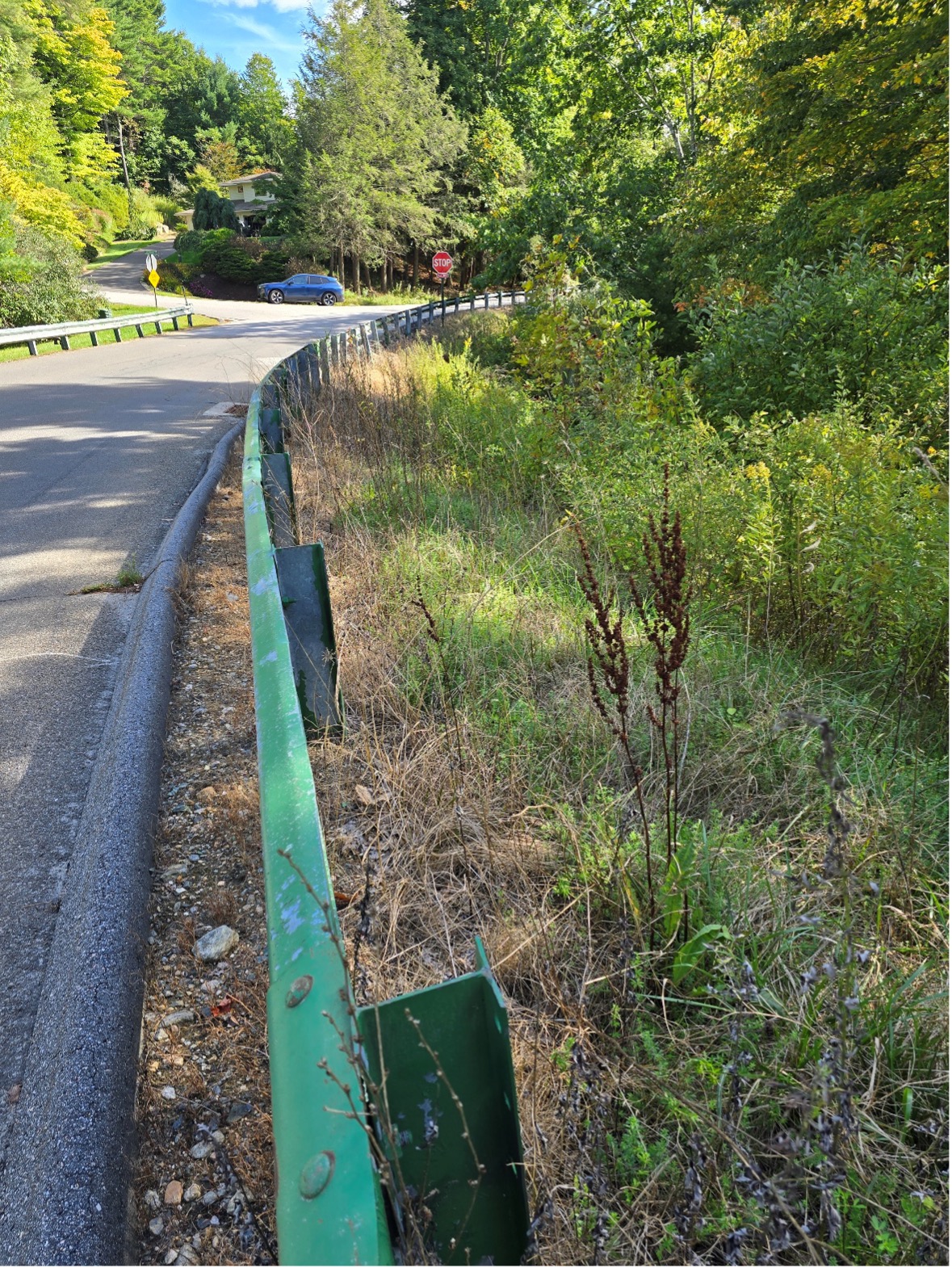
Residents and public officials in Goshen are questioning the Town’s roadside herbicide application practices following treatments along town Rightsof-Way (ROW) last August. Concerns have been voiced over the potential environmental impact of applications near lakes, streams, wetlands, and drainage swales and whether the applications complied with the Town’s own guidance on invasive species management.
“I’m wondering why they get permission to spray watercourses when that’s a serious violation of our wetland code,” said Matt Wheeler, member of Goshen’s Inland Wetlands and Watercourses Commission (IWWC), at the panel’s Aug. 13 meeting. “And it just bothers me because they do it every year.”
“And it’s not just the Town, it’s the State,” he said. “They blast the roadsides, the guardrail areas. The overspray’s out into the swamp. I just wonder: Is this an issue we bring up with the Selectmen?”
IWWC Chair Lorraine Lucas agreed the Town spraying of herbicides can be a concern. “I’ve had issues where I’ve seen them do things that we would never allow private citizens to do,” Lucas said. “We call them out, and I just talk to [Public Works Director] Garret [Harlow].” In August, a Town contractor applied pesticides to kill weeds on Town rights-ofway including BASF Finale, Bayer Oust XP, and Garlon 4 Ultra, according to Harlow. Labels for the herbicides show each of these warns against application near water and warn of potential groundwater contamination under certain conditions.
Finale, specifically, is listed as posing an “acute” hazard to aquatic environments. “Public Works and the Town did spraying of weeds along the road area. And the problem was they did it close enough that it could go into storm drains and then eventually empty into the lakes,” said Michelle Fitzpatrick, who represents Tyler Lake on the Town of Goshen Lake Weed Management Committee (LWMC). “They used three herbicides. They are all toxic to fish, and it's suggested ‘do not apply to water or areas where surface water is present.’ “We spend a lot of money on our lakes and to have somebody come along and put God only knows what into the water system,” she said. “That's wrong.”
In a Town of Goshen educational flyer entitled “MANAGING INVASIVE SPECIES RESPONSIBLY; A Guide to Safe, Targeted Herbicide Use & Wetland Protection”, provided by Land Use Official Marissa Wright, the use of aquatic-approved herbicides is identified as a “Best Management Practice”: “Standard weed killers often contain surfactants that are toxic to frogs, salamanders, and fish,” the guide states. “In wetland buffer zones, always select products specifically approved for aquatic environments.”
Critics argue that the three chemicals Harlow said the Town has used do not fit that standard. Product labels for BASF Finale Herbicide, Bayer Oust XP, and Garlon 4 Ultra all include the following statement: “Do not apply directly to water, or to areas where surface water is present, or to intertidal areas below the mean high-water mark.” The Bayer Oust label further states: “This product may impact surface water quality due to runoff of rainwater… This product is classified as having high potential for reaching surface water via runoff for several months or more after application.” Garlon 4 Ultra actually has an aquatic-approved alternate: Garland 3A.
Wright told the IWWC in September that she and Harlow had “a good discussion” regarding herbicide use, particularly near wetlands, after the questions raised by Wheeler at the Aug. 13 Commission session. She told the IWWC that they talked about the use of Rodeo, a Coreva Agriscience aquatic herbicide specifically aimed at controlling unwanted vegetation around water bodies.
Wright and Harlow also talked about optimizing the timing of cutting invasive species and subsequent spraying to later in the summer and fall to reduce chemical use and achieve good kill rate on invasive plants such as knotweed, Wright said. Wright told the IWWC that future contracts for weed control can specify that only aquatic-approved herbicides will be used in and around wetlands. She also said Harlow agreed to talk to the Commission and answer questions.
In response to another point, Wright said there are no special permits required for Public Works to conduct ordinary weed spraying, so the IWWC would typically not have advance notice.
“For routine maintenance, I don’t believe we require any kind of permit,” she said. “Only for specialty things, then they can come to the Commission.” Members of the LWMC, who represent residents at Dog Pond, Tyler Lake, West Side Pond, and Woodridge Lake, said a lack of advance notification was one of their biggest frustrations. “I felt as though the lake group should have been notified that the Town used some kind of weed killer along the roads,” Fitzpatrick said. “That can very easily seep into the lakes. We're only allowed to use certain herbicides and the stuff that they were using is not one of the certain herbicides.” LWMC member Chris Kennavane, who represents Woodridge Lake, also expressed frustration at being caught off guard by the Town’s pesticide use.
“They didn't inform anybody,” Kennavane said. “They sprayed here; they sprayed everywhere. Anywhere where they saw some weeds, they sprayed.” Residents were unaware of the application until the sprayed vegetation had already died. The Committee revisited the issue at its Oct. 13 meeting. “I thought they should have had signs up letting property owners know and associations that they were treating these areas … The plants died immediately,” Fitzpatrick said. “They're pretty strong herbicides. We should have been notified.”
She noted that when lake residents and associations around the bodies of water use herbicides, they must adhere to standards set by the Connecticut Department of Energy and Environmental Protection (DEEP).
“We go, we get permits, we get signage, we put it up,” Fitzpatrick said. “We notify the property owners and then we follow up with testing. I don't know whether they test, you know, but this went into the storm drains and the culverts.” As per Connecticut law, however, municipalities do not have to follow notification requirements when spraying public rights-of-way, utility distribution lines, and roadsides, according to DEEP. Statute distinguishes between ROW herbicide spraying and aquatic application, but LWMC members said notification is important to them regardless. “We spend a lot of money, and we're governed by DEEP not to put certain stuff in the lake, and I feel the lake community should have been notified that they were doing this,” Fitzpatrick said.
Committee Chairman Mark Harris weighed in as well. “We need full disclosure,” he said.
The need for treatment of invasive species of weeds is explained in the Town’s educational flyer. “Goshen’s scenic brooks, vernal pools, and pristine marshlands are among our town’s most valuable ecological assets,” the guide states. “However, these delicate wetland habitats face an ongoing threat from aggressive, non-native invasive plants. When left unmanaged, invasives degrade water quality, choke native plant life, and eliminate food and nesting areas for local wildlife.” Accordingly, the guide suggests “responsible herbicide use.”
“A judicious, targeted application of herbicide provides distinct advantages,” the guide states.