CT Glass Recycler Provides Real Concrete Benefits
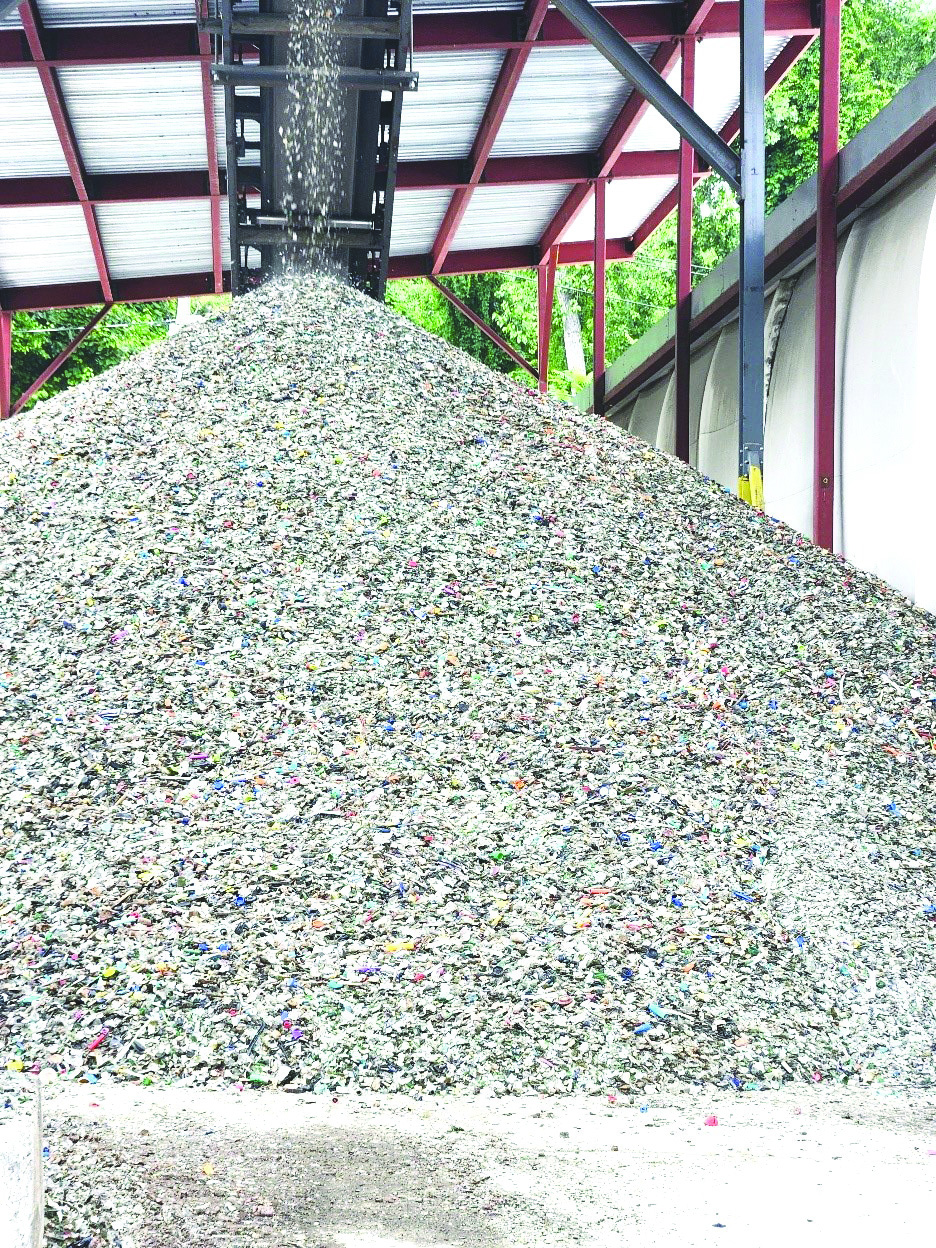
Crushed waste glass, sorted from local municipal single stream recycling, is received at the Urban Mining Industries facility in Beacon Falls/ Photo by Leya Edison
Of the 2¼ million tons of municipal solid waste (MSW) generated in CT each year, roughly 56,000 tons is marketable glass that is recovered from recycling bins after sorting, according to State data. There is no data indicating what percentage that figure represents of all glass CT residents place in the blue bins at the curb.
DEEP concedes that “In some cases, recycling facilities in CT may not be recycling glass collected from municipal recycling programs. Their sorting process may create a substandard product… Mixed broken glass is generally not marketable as a mix for most applications involving melting to produce new glass products.”
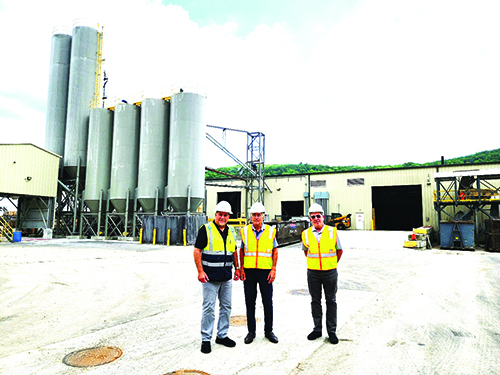
When glass is co-mingled and compacted with other recyclable wastes in single stream collection trucks on the way to a material recycling facility (MRF), it often leads to breakage and contamination with other residues.
That’s a problem that Beacon Falls-based Urban Mining Industries has solved, and it’s not the only one.
“We take every household's glass from Westchester County, New York, Rockland County, New York... We used to take all the glass from Fairfield County, Connecticut”, Urban’s Managing Partner, Patrick Grasso, told The Goshen News.
10-15% of the glass deposited at Urban Mining’s Beacon Falls facility is “non-glass residue”, the contaminants that cannot be separated out by the MRF’s. Urban has engineered their way around that issue with an innovative cleaning process that increases purity to 99.5% silica. But that’s only half the story. The other half is that Urban has a more effective use for the recycled glass than just melting it down to make new glass, and that’s as a high-performance additive in concrete.
“No matter how many times you look at this argument… you always wanna’ make new bottles and put [recycled glass] in concrete”, Grasso said. That’s because “the amount of energy that it takes to melt the glass again, it's almost as much as using virgin material.”
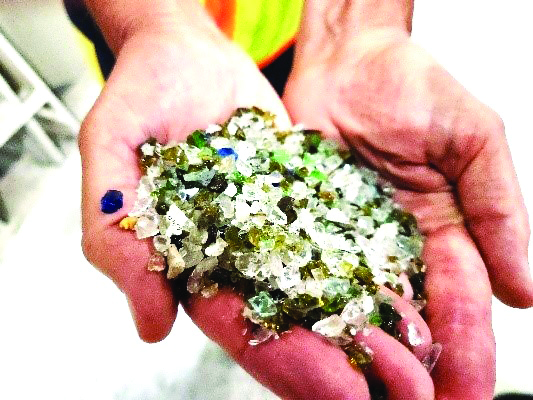
In Urban’s process, the cleaned glass is crushed and milled to a fine powder, using a small fraction of the energy it would have taken to melt it. The processed glass powder can replace 25% to 50% of the Portland cement in concrete at roughly 10% of the cost, while improving the concrete’s performance and durability. Improvements include greater resistance to de-icing salts and freeze-thaw exposures, higher strength, brighter color, and lower heat of hydration, an important factor in mass concrete applications such as dams and bridge piers.
The benefits don’t stop there.
Reducing cement usage has significant environmental benefits in and of itself. The cement industry generates roughly 8% of the world’s climate-changing greenhouse gasses in its energy-intensive process, and has been working to reduce that carbon footprint. So far, they have implemented a 5% reduction by adding crushed limestone to some cements. 25% replacement with post-consumer, 100% recycled, locally processed glass that is produced with 96% less energy is clearly a giant step forward.
The process is 25 years old, but the chemistry dates back thousands of years to the Roman Empire. The Romans added volcanic ash to lime to make the famous Roman Cement, much of which has endured to present times. The ash was harvested from the town of Pozzuoli, near Mt. Vesuvius, and hence the name given to several classes of reactive additives is “pozzolans”, a connection Urban Mining has drawn by naming its product “Pozzotive”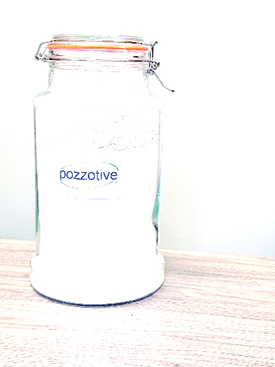 .
.
Reduced costs for transportation and processing, reduced costs for cement consumers, improved performance, higher recycling efficiency and waste reduction, greenhouse gas reduction. Everybody wins. The product recently won an innovation award from the National Concrete Ready-Mix Association.
The Beacon Falls plant is not an experimental operation. They process 25,000 tons of waste glass annually and can produce a lot more. Major local users include Torrington’s O & G Industries, which has invested in the Company, Westbrook Block Co., and Laticrete International in Bethany. Major projects include the concrete masonry in the new Yankee Stadium, the Treehouse Conference Center and the Pritzker buildings at Harvard University, the Second Avenue subway in New York, and more locally, the new Torrington Middle and High Schools.
“So it's kind of a here and now solution, right?”, said Inventor and Urban Mining CEO Louis Grasso, Patrick’s nephew. “This is not a desktop theoretical idea. These are people that are using it commercially.”
With the plant’s expanding capacity and growing product demand, processing of all glass waste from the Northwest Corner could simply be a matter of getting it there.