DEEP Denies Public Disclosure of Contamination is Required
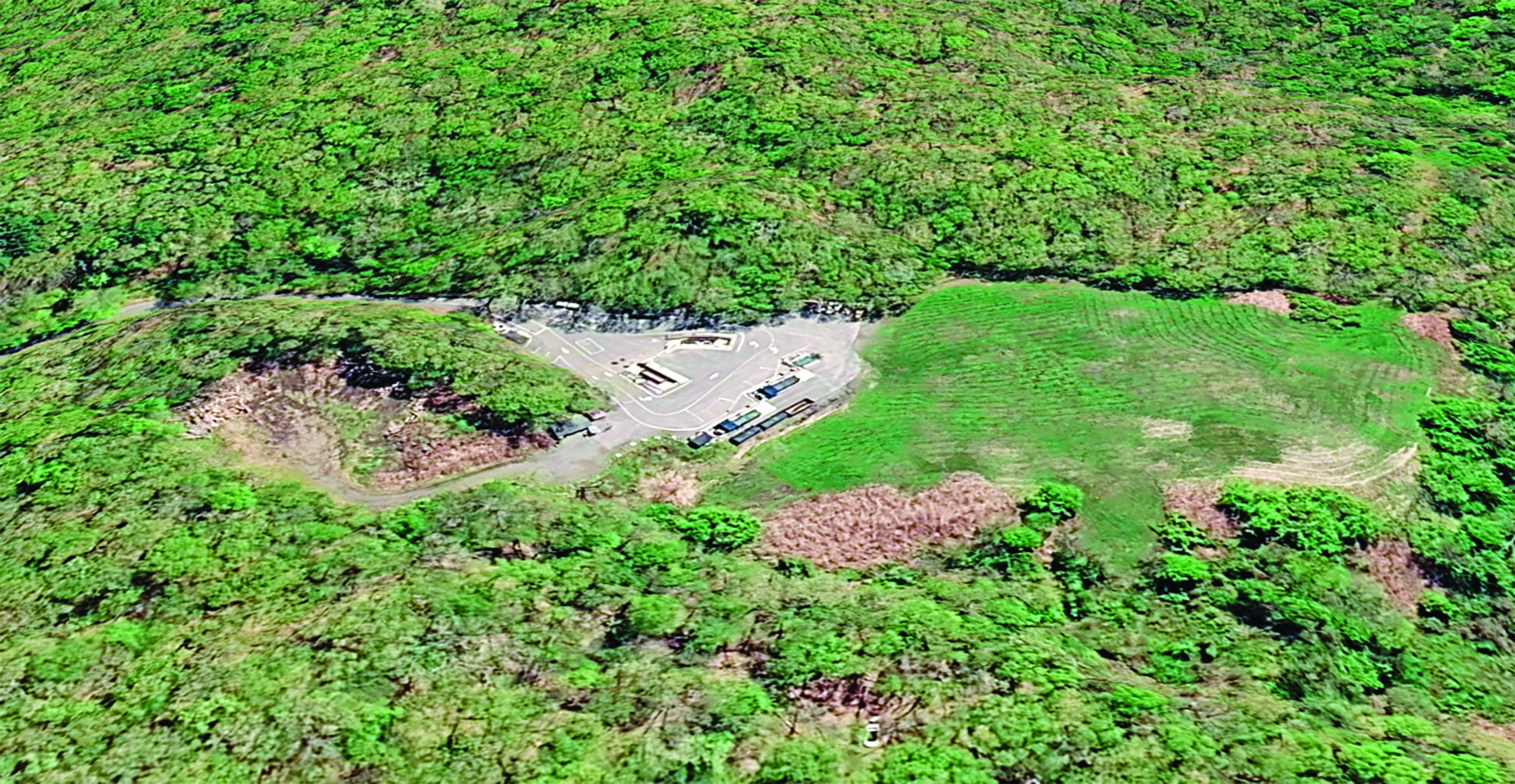
Washington transfer station and landfill/Courtesy Google Earth. Includes data from Airbus
Town leaders in Washington, CT, have tried for at least two years to purchase the community’s former landfill property, saying the move would save money over time.
Along the way, some have expressed frustration with the pace of the effort.
“The craziness with the State government” holding up the matter was cited by Town Selectmen Jay Hubelbank — nearly two years ago.
The agency leading state involvement is the Department of Energy and Environmental Protection (DEEP), and the Town of Washington isn’t the only Northwest Hills community that has struggled in working with DEEP, according to several officials.
It will soon be a year since Goshen neighbors took photos and video they say shows illegal dumping at the back of the Ike’s Auto Body property at 225 North Goshen Road. Officials with DEEP’s Waste Engineering and Enforcement Division (WEED) said the evidence didn’t meet the high legal standard it takes to spur state action.
These situations echo that of the Woodridge Lake Sewer District (WLSD) Board, which is decades into working with DEEP to solve challenges the state identified with its sewer system in Goshen.
In that instance, as with the Town of Washington, DEEP holds the cards: A Department spokesman said last month the latest WLSD engineering proposal from earlier this year is “in the queue for Department review.”
“The Department does not prescribe solutions but rather evaluates engineering designs to determine whether such design meets relevant statutes and regulations and can be authorized,” the spokesman said in response to WLSD frustrations at repeated delays.
The Town of Goshen is pursuing its own action regarding the Ike’s site on North GoshenRoad.
“Our investigation is not over,” said Tom Stansfield, member of the Town of Goshen’s Inland Wetlands and Water Courses Commission (IWWC). At a July 2 meeting, he told neighbors of the Ike’s property “I feel for you guys. It’s a frustration that we all share.”
In Washington, a “group of concerned taxpayers” led by longtime resident John Buonaiuto has sought answers about the Town’s obligations should the $250,000 old landfill purchase go through — and even now as the Town pays for site environmental testing.
Gabrielle Frigon, director of WEED, said in a January email that all relevant regulatory obligations as to the landfill will become the Town’s when it purchases the land.
“Any activities on the landfill will have to be vetted by DEEP and potentially approved by the commissioner,” she said.
The Town of Washington’s quest to purchase the community’s former landfill where its transfer
station now operates on Clark Road, off Nettleton Hollow, is subject to environmental testing
required by DEEP.
That testing on the Town’s dime is ongoing. In answer to emailed questions from Buonaiuto, WEED Director Frigon said the Town isn’t required to notify residents if tests reveal contamination at the site.
“The town does not own the landfill and therefore does not have an obligation to inform anyone of the sample results,” Frigon said in an email. “In this circumstance, where there is an obligation pursuant to a state requirement (DEEP/Waste Engineering and Enforcement Division) for water quality monitoring in the area of a closed landfill, the obligation is on the landfill owner to report to DEEP.
“The information submitted to DEEP is public information and the Town sharing the information is a courtesy and not an obligation on the Town,” Frigon wrote.
A memo to the Washington Republican Town Committee shows Frigon was asked, “Are there DEEP regulations and stipulations that the Town is obligated to fulfill and adhere to moving forward?”
Her email reply: “Once the town owns the landfill property all regulatory obligations pertaining to the monitoring and maintenance of the landfill cap, water quality monitoring will become the Town’s responsibility.”
Washington First Selectman James Brinton said local leaders work hand-in-hand with state officials.
“It’s a collaborative effort,” Brinton said. “DEEP is a part of that conversation.”
LATEST TEST RESULTS
The next step is to test water in private wells of landowners whose property borders the former landfill, and Brinton said that work is progressing.
“They selected eight neighboring wells to test,” Brinton said in mid-August. “As of last week, they had gotten five of the properties completed.”
Doing the work is GO Environmental, LLC of Milford, the same company that finished a Groundwater Sampling Report focusing on the former landfill property itself in May. Brinton said a “preliminary” look at the neighboring well test results so far shows some positive signs, a GO Environmental worker told him.
“At first glance it doesn’t look like we have elevated levels of ETPH and metals,” Brinton said.
The Extractable Total Petroleum Hydrocarbons (ETPH) test measures medium-to-heavy petroleum products ranging from diesel to kerosene trapped, in this case, in water samples, according to DEEP. Brinton said he understands “low levels of some metals,” if present, can occur naturally due to the area’s native bedrock.
Before the Town of Washington could buy the old landfill property, a Town Meeting would be required.
The May report from GO Environmental on the landfill property focused on analysis of samples from three test wells. Elevated concentrations of several chemicals were found that exceed allowable limits, the analysis states, and these included Volatile Organic Compounds (VOCs) that originate from paints, cleaning supplies, and other liquids; ETPH; and heavy metals “well above regulatory criteria.”
Tests detected leachate water, which forms when rainwater filters through waste placed in a landfill, according to the U.S. Environmental Protection Agency (EPA). Water that encounters buried wastes leaches or draws out chemicals of constituents from those wastes, the EPA states. DEEP’s regulations require groundwater to be remediated and surface water to be protected against infiltration of these contaminants.
NOTHING NEW’
The ongoing query into allegations of illegal dumping at Ike’s Auto Body in Goshen topped the IWWC Aug. 13 special meeting agenda. No representative from Ike’s attended.
The show cause hearing, now continued to September, was first set for last December on what the IWWC said was “illegal dumping of refuse and other material within a regulated wetlands upland review area.”
“I have nothing new for you,” IWWC Chair Lorraine Lucas said. “It is with the town lawyer. He’s handling it.” Marissa Wright, Inland Wetlands and Zoning Enforcement Officer, reported the last correspondence she received from Ike’s on the matter was June 18.
“I have followed up again, but I have received nothing back, unfortunately,” Wright said. Audience members asked if the property’s wetlands are marked with flags as the Commission had directed the owners to do.
“They gave a partial flagging,” Lucas said. “They did not give the whole flagging, and we requested the whole thing be flagged.”
In July, the Town confirmed its enforcement authority through the IWWC due to the site’s proximity to wetlands, and that led Lucas to note on Aug. 13, the issue now rests with the Town attorney.
The owner denies doing any illegal dumping, former Enforcement Officer Spencer Musselman has told the Commission.
DEEP officials told Town leaders the issue is up to local enforcement, First Selectman Seth Breakell has told The Goshen News. He could not be reached to comment for this story.
Lucas and Stansfield have both publicly expressed frustration at DEEP’s lack of action. “We’ve reached out to DEEP. They’re not pursuing this,” Lucas said July 2. “We’re not getting any support whatsoever. It’s very frustrating.”
Asked how far the Town will go to help residents whose land adjoins the Ike’s property if they are affected by environmental issues such as any contaminants that could leak into their water wells, Stansfield said for him, personally, the answer is, “whatever it takes.”
‘DO IT RIGHT’
The Town of Goshen’s next legal move is in the works, but IWWC members said they at least are glad to know they have options to act — with or without any state agency.
“I still don’t think that’s a dead issue. I think there are still means of getting this back to DEEP. But we need to gather information,” Stansfield said.
“We gotta get on that property and see what’s going on,” he said, emphasizing the Town must do so legally. “I want to make sure we do it right.”
IWWC member Ray Turri, who has worked with DEEP through his involvement on the WLSD (Woodridge Lake Sewer District) Board said: “I’ve been working with DEEP for the last 20 years. I get nowhere.”
“We’re doing the best we can for the community,” Turri said. “It’s frustrating, but we’re doing the best we can in your best interest.”