Sean Scanlon Discusses Role as State Comptroller.
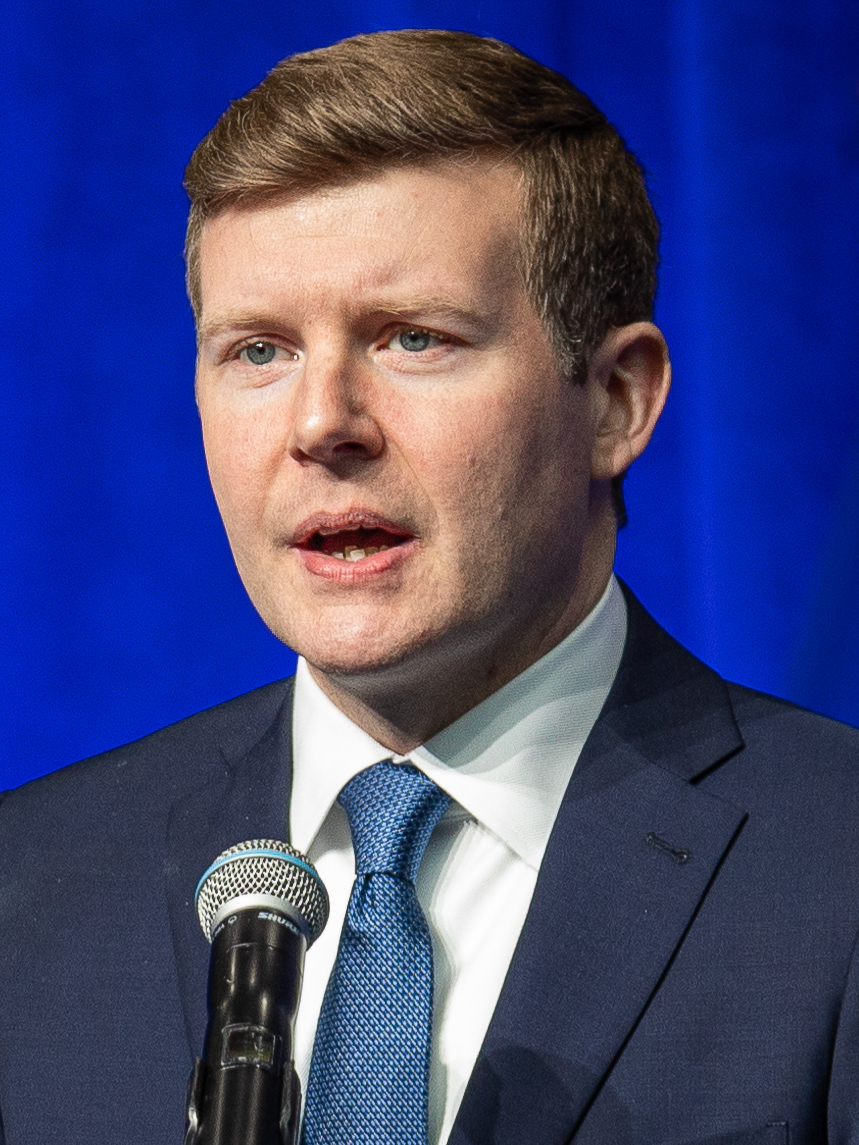
Connecticut State Comptroller Sean Scanlon recently visited with The Goshen News Publisher Leya Edison about his role overseeing state finances, pensions, and healthcare initiatives.
GN: You've been in office three and a half years. Is it different from what you thought it would be?
Scanlon: “I went into this knowing a lot about the Comptroller's Office because I had worked with the previous occupants of the office and I worked on a lot of policy in the legislature that was germane to the office. I think what I've learned being the Comptroller is how much more stuff the office does that I wasn't even aware of.”
GN: There are a lot of people who read the paper that don't know what the Comptroller does. Can you explain that to our readers?
Scanlon: “The simplest definition of what I do is I'm the chief fiscal watchdog of the state, chief fiscal officer of the state. We pay the bills, we keep the books, we pay the employees, we audit the budget, we run the large benefit packages that the state offers. I run the largest employer-based health plan in the State of Connecticut. We run retirement programs, meaning for pensions. We run the small business retirement program for the state, which has about 8,000 businesses in it called MyCTSavings. We do a lot of the functions that a typical CFO in a company would do.”
GN: You came into the office when Connecticut had a huge debt, and I understand that that is being paid down with surpluses. Tell us how you help with that.
Scanlon: “So between 1939 and 1971, '39 being when we started offering pensions in the state, the state put aside $0 for those pensions. And between '71 and 2011, they put aside next to nothing. So, it's only been since 2011 that we have made the actuarial required contribution to our pension fund every year, which is staggering to think about when you think about the history of Connecticut. We had by that point in the 2010s accumulated a significant amount of debt. So, depending on what ranking you look at, we were top three in the nation regarding unfunded pension liability. Starting in 2017, when we passed a bipartisan budget that changed the way that we budget and instituted what are known as the fiscal guardrails, we started setting aside money to make overage payments on that debt.”
“And so far, in the last seven years, we've made $10 billion of overage payments on that debt. We intend to make another, my office predicts, another billion-dollar payment in the fall when we close the books on the fiscal year that ends on June 30th. And that debt payoff is having a significant impact on the fund in the sense that last year in 2025, the main pension fund, which was called SERS, was 60% funded. In 2018, it was only 32% funded. So, it's a significant jump in just eight years. And I think that that's one of many examples of how us getting our fiscal house in order and paying attention to this debt is helping the state get out of the fiscal crisis that we were in when I first ran for office.”
GN: You started the new Connecticut Citizens Assembly. Please tell me about that.
Scanlon: “So, I have long believed that we have an unsustainable and dysfunctional system of local taxation. That the property tax system is a really broken system that has a ton of bad outcomes for people, makes the state more unaffordable than it needs to be, puts stresses on different forms of government. Last summer, I decided to try to do something about it and I felt like I was finally in a place that I could do that. So, I started by getting a group of mayors and first selectmen, Democrats and Republicans around a table trying to find some consensus.”
GN: How do you pick them?
Scanlon: “I went to every single Council of Government (COG) meeting, and I said, ‘Hey, I think this is a broken system. I know you agree. And if you want to be a part of trying to help solve it with me, volunteer for this thankless, difficult task force.’ And so that's how I got 14 people.”
“We had this crazy idea, what if we hosted a citizen’s assembly where you bring together a socioeconomically and politically diverse group of people and put them in a room, give them all the information about what's going on with an issue and ask them to see if they can find some consensus. I'm working with Yale and UCONN and the Connecticut Conference of Municipalities. And starting on July 11, we're going to all get in a room together for a few weeks over the summer and try to find a consensus about what it is that we can do to fix the property tax system.”
GN: What do you see in the future as things you'd like to tackle more?
Scanlon: “Property tax is certainly my big focus, but the second one in 2027 will be healthcare. The governor has asked me to take the lead on trying to figure out a universal healthcare option for the state. We've been referring to that as the Connecticut Option. I think our healthcare system, like the property tax system, is completely broken. It's unaffordable for just about everybody in our state. Access is getting worse, insurance is covering less, it's costing more. There's great hospital care in the state, but it's very expensive. We're trying to do things to try to get ahold of both cost and access. You'll see me making a very big push in 2027 to work with the governor to create a newer system in the state that can try to lower those costs for people and give them a new option.”