Northwest Hills Council of Governments Meeting

3/12/26, 10 AM
Present via Zoom: Board Chair Dan Jerram, Treasurer Tom Weik, and Representatives Greg LaCava, Molly Spino, Todd Arcelaschi, David Barger, Magi Winslow, Eric Epstein, Jim Brinton, Bradley Bremer, Curtis Rand, Jesse Bunce, Paul Harrington, Katherine Kiefer, Gordon Ridgeway, and Casey Flanagan. Absent: Seth Breakell, Doug Thompson, Henry Tirrell, Vice Chair Michael Criss, and Secretary Patrick Roy
The 21 members of the Northwest Hills Council of Governments (NHCOG) will be paying more in their yearly dues for the fiscal year 2026-2027.
Dignitaries from the member localities voted unanimously to approve the new dues schedule at their March meeting, which holds flat the assessment ratio from the previous amounts. The ratio is calculated at $.80 per capita, meaning municipalities pay $.80 per person in their city, town, or village. Population estimates are provided by the Connecticut Department of Public Health.
Below is a table of the dues municipalities in NHCOG will pay for this upcoming fiscal year:
|
Municipality |
Most up-to-date population numbers |
Total dues for fiscal year 2026-2027 |
|
Barkhamsted |
3,717 |
$2,973.60 |
|
Burlington |
9,804 |
$7,843.20 |
|
Canaan/Falls Village |
1,088 |
$870.40 |
|
Colebrook |
1,370 |
$1,096 |
|
Cornwall |
1,585 |
$1,268 |
|
Goshen |
3,265 |
$2,612 |
|
Hartland |
1,921 |
$1,536.80 |
|
Harwinton |
5,688 |
$4,550.40 |
|
Kent |
3,084 |
$2,467.20 |
|
Litchfield |
8,333 |
$6,666.40 |
|
Morris |
2,290 |
$1,832 |
|
New Hartford |
6,710 |
$5,368 |
|
Norfolk |
1,601 |
$1,280.80 |
|
North Canaan |
3,220 |
$2,576 |
|
Roxbury |
2,310 |
$1,848 |
|
Salisbury |
4,279 |
$3,423.20 |
|
Sharon |
2,755 |
$2,204 |
|
Torrington |
35,673 |
$28,538.40 |
|
Warren |
1,378 |
$1,102.40 |
|
Washington |
3,721 |
$2,976.80 |
|
Winchester |
10,309 |
$8,247.20 |
|
TOTAL |
114,101 |
$91,280.80 |
“These are obviously a critical part of our budget that we need to have in place,” said Robert Phillips, NHCOG’s Executive Director.
Denise Raap, First Selectman of the town of Litchfield, said there are some positives to the dues calculations.
“It’s good,” she said. “It’s actually good that we’re actually not losing population. We’re adding to our population. So that’s a positive.”
Also at the meeting, Phillips provided updates on the coalition’s new regional planner staff position. The new hire will be a housing and downtown specialist, according to a LinkedIn post advertising the position created in February. The advertisement received around 25 applicants, according to the post. Compensation for the potential new hire will be around $75,000 to $85,000.
The job description indicated that the regional planner will support municipal and regional planning initiatives. The role emphasizes a primary focus on housing policy, land use, zoning, and the planning, revitalization, and management of village centers, downtowns, and mixed-use districts.
“We have already completed our initial round of screening interviews of almost 10 candidates, and we are going to be moving into the second round with those that we feel as though are worthy of continued discussion,” Phillips said.
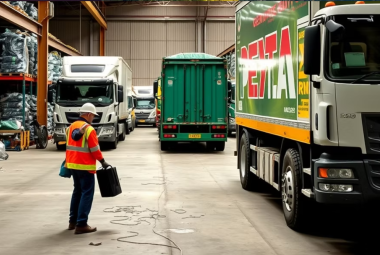
The coalition also discussed issues with road salt storage for smaller municipalities, particularly in the face of a harsher winter across the East Coast. Phillips said some localities in Connecticut don’t have the capacity to hold enough road salt to last the winter.
“They may be really just holding a storage capacity for two or three storms, depending on the severity. We have freeze-thaw cycles out here in the Northwest Hills, as everybody knows,” Phillips said. “And when you have a hard winter like we just had, you can particularly have some real issues. This was up and down the East Coast, which actually complicated the situation even more because of the demand with such a hard winter.”
Phillips noted the region had a bottleneck, lacking road salt this winter. One of the potential solutions could be to establish an emergency cache of road salt that can be used in emergency cases, Phillips said.
Salt could be stored at the transfer station in the City of Torrington, according to Phillips.
“We have a scale there. Do we have enough room for an emergency salt supply cache?” Phillips said. “That is something to be discussed in the future. But I wanted everybody to be aware that this is something that we really want to tackle and see if we can make this a little bit easier to deal with in the future.”
Solving issues of road salt availability doesn’t just help with roadways, Phillips said.
“It’s not just a public health and safety issue,” he noted. “It really is a perception issue of whether our towns are doing the work that the constituents think should be done.”
A lack of road salt and a potential solution to the shortages will be explored by NHCOG into the summer, Phillips added.
NHCOG Board Chair Dan Jerram said the first step toward finding a solution might be to assess every municipality’s capacity to store road salt. Jerram then wants to match the tons of salt stored with the road miles found in the town.
“We could see how many tons per mile,” said Jerram, who is also the first selectman of the Town of New Hartford. “More is better, folks. And if you got to build a new bin, get working on it. We have three in New Hartford, and I’m thinking about a fourth, because we cannot have this type of bottleneck.”