SPOTLIGHT: Senator Stephen Harding Talks withThe Goshen News
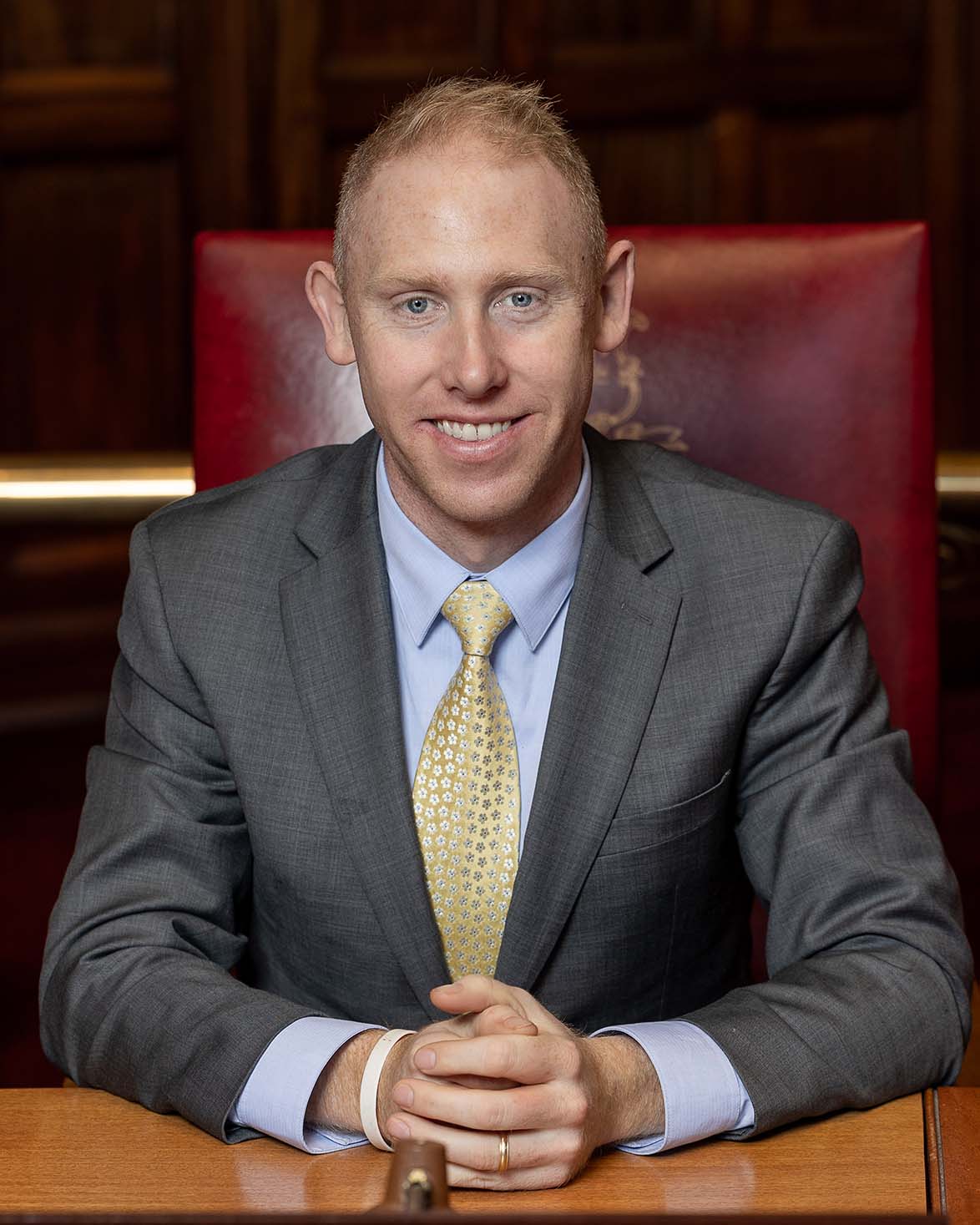
We started by asking Senator Harding what changes he has seen since he first started in elected office.
“My first 8 years were in the House, and in many ways the House and Senate operate differently. It’s different in the manner that you’re one of 151 [in the house] so being able to collaborate, it’s a little more difficult, because you’re trying to get a consensus of a majority of 151, and in other ways it’s very similar, because it’s still very much the same type of job. You’re promoting policy that you think is in the best interests of your constituency, you’re in the same committees as you are on as a representative… In Connecticut we do not have separate committees like Washington DC has, we have joint Senate and House committees, and so in many ways the committee work is very similar… I think I’ve been able to garner my experience in the House and utilize that effectively as a Senator…and even more so now in my additional role as a leader of the caucus.”
We next asked about the current state of the Republican party in Connecticut. Is Connecticut’s Republican Party more moderate than, say, Alabama or Ohio; are you able to build consensus?
“There are certain ideological differences. I don’t know exactly what the platform may be for each individual state Republican Party, but I would say the Connecticut Republican Party is probably a different brand than what you would see in other states. Ultimately what matters to me in terms of the Party is a big tent Republican Party. It’s important to be collaborative with all individuals and take everyone’s thoughts into consideration as a party, and I think we can be a big tent. Frankly with the numbers that we have in the State, being as low as they are in terms of the percentage of voter registration, I think we have to be collaborative… It comes down to collaboration and respecting ideas, respecting principles and working to find solutions and agreement. That goes a long way, now, in State government…”
That led to discussion of some specific issues, starting with what is a big concern in Goshen, affordable housing. Goshen is a town without infrastructure to support high density housing. We don’t have sidewalks, we don’t have shopping areas.
“Outside of Woodridge Lake you don’t have sewers”.
Citing data gleaned from review of tax records, we noted that 25-30% of Goshen housing would be considered “naturally affordable” based on value, though not deed-restricted to qualify as what the State defines as affordable housing. We further noted that Republican bills wanted to include “naturally affordable housing” and that the Democratic Party apparently is much more focused on integrating all the towns in Connecticut.
|
“We believe that out of the 169 towns we have in Connecticut there’s 169 different situations and you laid out a very important concept there, that Goshen is very unique.” |
“Yes. I think it comes down to local control, and I think the Republican Party, myself included, believe in local control in Planning & Zoning issues. We believe that out of the 169 towns we have in Connecticut there’s 169 different situations and you laid out a very important concept there, that Goshen is very unique. Goshen is a very different community than, let’s say, West Hartford, and even in my district, New Milford is a much different town than Sharon, or Kent, or Salisbury… These are very different communities with different needs, and I have often found that when decisions are made on a local level by local individuals, it oftentimes is the best solution…for everybody involved. You know your community better than anybody else.”
We asked about a bill coming before the legislature that would mandate that 50% of State spending on advertising be placed in locally owned newspapers, rather than large, out-of-state conglomerates.
“The local paper is something that unfortunately is becoming more and more difficult to keep operating… it fosters conversations around local issues. If you don’t have that local paper you’re never going to have that discussion that’s critically important to your local government. We’ve seen it in many towns…that lost that local paper, it creates a void in terms of civic involvement locally, at least, because regional papers are only going to report regional issues, or state-wide issues for the State papers, for that matter. You’re not going to get that local perspective, which is really important to civics locally.”
Our last question was regarding FOIA (Freedom of Information Act). We have noticed that it takes a year to get a hearing from FOIA, and by that time the information that we need to get from the government is becoming moot. Is there a way to better fund FOIA so that they can hire more staff and provide a quicker turn-around?
“In my opinion it’s a critical investment. We have a bill in this year to review the FOIA process…I’ve heard from constituents who tell me how difficult the process is, and how difficult the litigious aspect of the process is, in terms of a town if they don’t want to provide whatever you’re requesting, and how it can get very litigious and very complex and expensive for an individual who’s simply trying to get some governmental information which they’re rightfully entitled to… Turn around time is something we need to look at too… It’s probably not a huge investment for a lot of returns from a civic perspective.”