Torrington Transfer Station Conveyance to NRRA Gets Unanimous State Board Approval
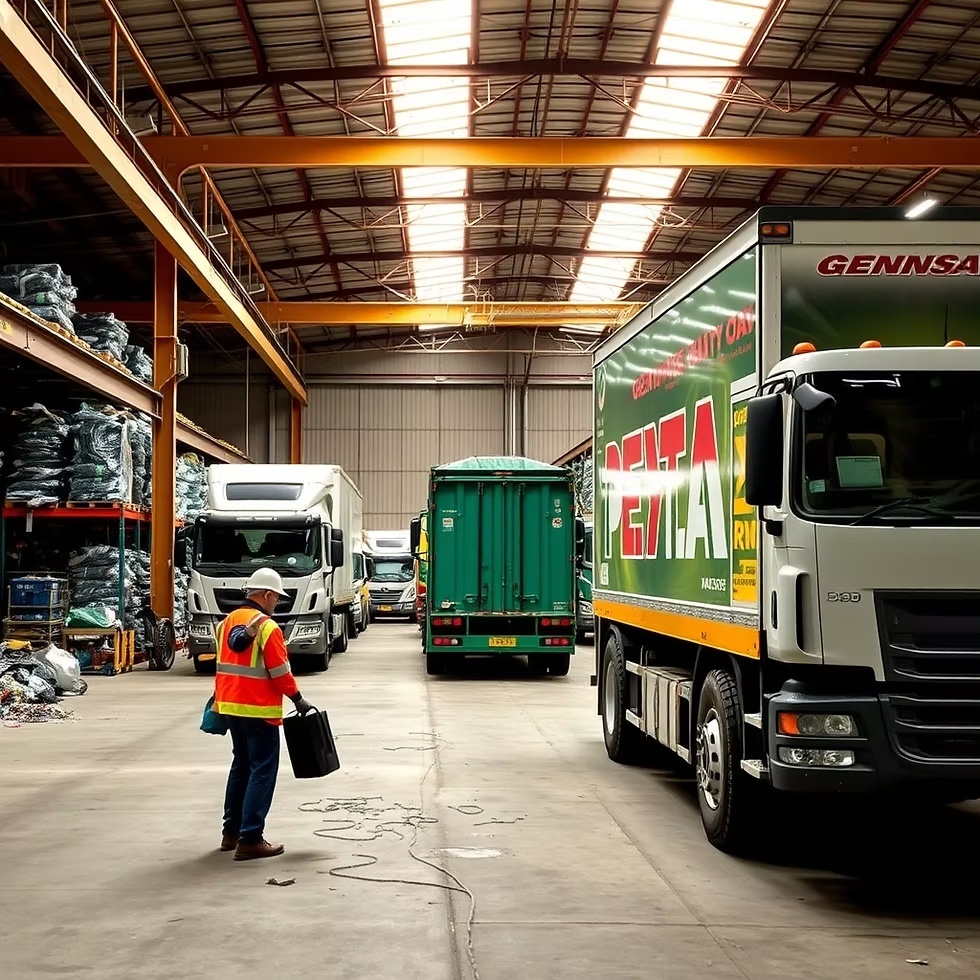
The fledgling Northwest Resource Recovery Authority (NRRA) is taking over the Torrington Transfer Station thanks to a June 11 unanimous vote in favor of the move by members of the State Properties Review Board (SPRB).
The solid waste transfer facility thus remains a public utility, but for the NRRA, the question is: What now?
The conveyance came despite strong opposition from Enfield-based USA Waste and Recycling, Inc., which offered to purchase the transfer station from the state for $3.25 million but was turned away by state lawmakers. In related matters, USA Waste says it now has filed two Freedom of Information complaints against the NRRA.
The mayor of Torrington, the largest member of the NRRA, has expressed concerns about the authority’s administration. “Without having the full picture and being a part of the entire conversation, I can’t be confident in their operations,” Mayor Molly Spino told The Goshen News on May 18.
Yet the NRRA was created by the Torrington City Council in cooperation with the Northwest Hills Council of Governments (NHCOG) in May 2025 with an eye toward supporting viable trash and recycling services for its municipal participants. Torrington, Goshen, Sharon, Cornwall, Salisbury, and Norfolk are confirmed members.
The NRRA leadership, according to the group’s April 16 meeting agenda, is made up of New Hartford First Selectman Daniel Jerram, chairman; former Torrington Mayor Elinor Carbone, treasurer; retired Torrington probate judge Michael Magistrali, secretary; former First Selectman Todd Carusillo of the Town of Goshen; Salisbury First Selectman Curtis Rand; and Norfolk First Selectman Henry Tirrell.
Rista Malanca, director of economic and community development for Litchfield-based NHCOG, said via email June 19 the agency provides “administrative support” for the NRRA, and questions should be routed to the NRRA Communications Committee.
Then, via phone June 22, Salisbury’s Rand said in response it is too early to comment on the NRRA’s next steps.
The authority may be new but the larger plight for the Constitution State certainly is not.
ONGOING CRISIS
Connecticut’s solid waste struggles are at least in part a simple matter of numbers: The state generates about 3.5 million tons of trash annually but only has in-state capacity to manage about 2.7 million tons, according to Jennifer Heaton-Jones, executive director of the Housatonic Resources Recovery Authority (HRRA).
The state’s garbage goes to waste-to-energy facilities or is shipped to out-of-state landfills in Ohio, Pennsylvania and upstate New York. Using the latter method to fill the 1.2-million-ton gap each year is expensive and, Heaton-Jones argues, unsustainable.
Beyond burning waste or burying it, reduction is key, according to Heaton-Jones. Local waste handling must focus on source separation including collection of organics, ramped-up recycling, and more, she said. Residents themselves are key to addressing the issue, too.
“Residents must be better informed and engaged in understanding the state’s waste challenges and their role in addressing them,” Heaton-Jones wrote on May 2 in The Goshen News. “Education is essential to shifting behavior, improving participation, and building public support for necessary changes.”
ENTER THE NRRA
Many Northwest Corner leaders have worked for years to route municipal solid waste and recycling operations through public service utilizing the Torrington Transfer Station. Most recently, initiation of the process to switch ownership of the four-acre station, 118 Vista Drive, from the state to the regional NRRA was finalized by Gov. Ned Lamont’s signature on a legislature-approved bill May 19.
It will cost administrative fees only for the NRRA to take over the station. The goal is for the NRRA to offer municipal solid waste management and recycling services to communities in Northwest Connecticut via a publicly controlled authority.
The NHCOG’s Malanca said earlier this year once the ownership transfer was granted, the NRRA would negotiate with private haulers paid through tipping fees to manage the facility.
Torrington, however, the biggest NRRA member, extended its contract with USA Waste for municipal solid waste disposal by a 4-2 council vote on May 4, more than a month before the SPRB approved the NRRA to take over the transfer station.
Mayor Spino told The Goshen News on May 18 the renewal would not alter current operations and keeps a price of $116 per ton for the current fiscal year. The 10-year agreement includes an opt-out after three years.
Spino also said she was concerned it would be too long before the NRRA can operate trash services, so she supported the contract extension with USA Waste.
NRRA’s Magistrali, former Torrington corporation counsel, spoke at the council meeting to raise concerns that the contract extension could affect the NRRA’s plans.
“I'm baffled and confused by what's happening now, and I'm also baffled and a little disappointed in the lack of transparency,” Magistrali said, as The Goshen News reported June 1.
STRONG OPPOSITION
The most vocal opponent of the transfer station’s conveyance to the NRRA is USA Waste and Recycling, whose attorney filed a 120-page memorandum with the SPRB on June 9, two days before the panel approved the move.
Edward Spinella, Esq. of Enfield called the NRRA “an unproven regional authority.”
“The NRRA remains a nebulous entity without a clear operational plan, without demonstrated expertise to run a regional transfer station, and without transparency regarding how this
model will function financially over the long term,” Spinella wrote on behalf of USA Waste, which offers trash collection and related services in about 120 Connecticut municipalities.
The private company has filed two complaints to the state Freedom of Information Commission, according to its memorandum to the SPRB, alleging the NRRA “routinely and willfully fails to follow the FOIA and the NRRA bylaws.”
David S. Hardy, a partner in Carmody Torrance Sandak & Hennessey, LLP of New Haven, alleged a “pattern and practice of non-compliance” in holding meetings and handling records, among other accusations.
“The NRRA is a serial violator of the FOIA and its own bylaws,” Hardy wrote. “Simply put, (the Department of Administrative Services) and the SPRB should not do business with a scofflaw.”