Falls Village History
Walk through downtown in Falls Village and you’ll find it quaint and peaceful, if not altogether quiet. That’s a pretty massive departure from the beehive of activity it once was during the Civil War era.
The town’s location on the Housatonic River made it a key point along the Housatonic Railroad. Trains heading south would stop in Falls Village on their way to Bridgeport, while northbound trains stop there on route to Massachusetts. The Falls Village Railroad Depot itself was built in the 1840s, with three tracks along the platform line.
One track was for the station, one was the main line, and the other was a milk line, which would pick up milk from the Borden Creamery.
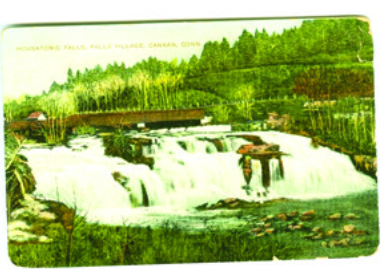
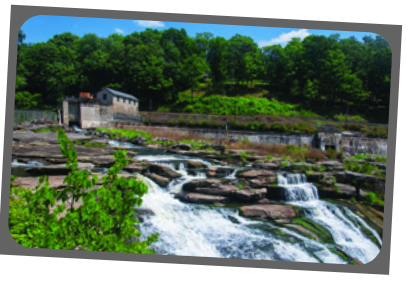
Falls Village had become such a pivotal stop on the railroad because of all the ironwork done in the area. The Great Falls on the Housatonic River – which to date remain a beautiful sightseeing destination – allowed for the production of cannons that were used in the Civil War.
The massive volume of water factories could utilize, from the state’s second-biggest river, made factories and iron production a central part of the economy for decades. It employed hundreds of people, and, given the 24/7 nature of the industry, kept the center of Falls Village active at all hours.
When the Civil War concluded, the Housatonic Railroad Company bought Ames Iron Works, and repurposed it for construction shops and railroad repair. That gave Falls Village a few more decades of life as an industrial town.
However, in 1898, the Housatonic Railroad Company merged with the New York, New Haven and Hartford Railroad, which resulted in the closure of the Housatonic Railroad shops. Because of that, many families moved out of town, grinding the bustling nature of the village center to a halt. By 1923, the last working iron furnaces in East Canaan had shut down. The buildings along the river were torn down thereafter, and in 1914 a dam and hydraulic plant opened.
Despite all the changes in industry, the framework of the town has remained similar in ways, some of which can still be seen today. The depot still exists, as does the historic Falls Village Inn, which was built in 1834 and remains open. Things are a little quieter with all of the ironwork gone, making the downtown more quintessential Litchfield County these days than hub of industry.
The depot serves an appropriate function now, housing the Falls Village-Canaan Historical Society Museum and offices. It has dozens of artifacts from that era, from pictures to a piece of the first track.
The roar of the falls still is very much audible as you walk around downtown. Main Street includes a few shops, a cafe, and a library, plus access to the Appalachian Trail along the Housatonic nearby. Still, the caboose of a New Haven train remains a downtown landmark, an apt reminder of the many iterations of Falls Village.