Rodent Control Practices Harm Humans and Wildlife
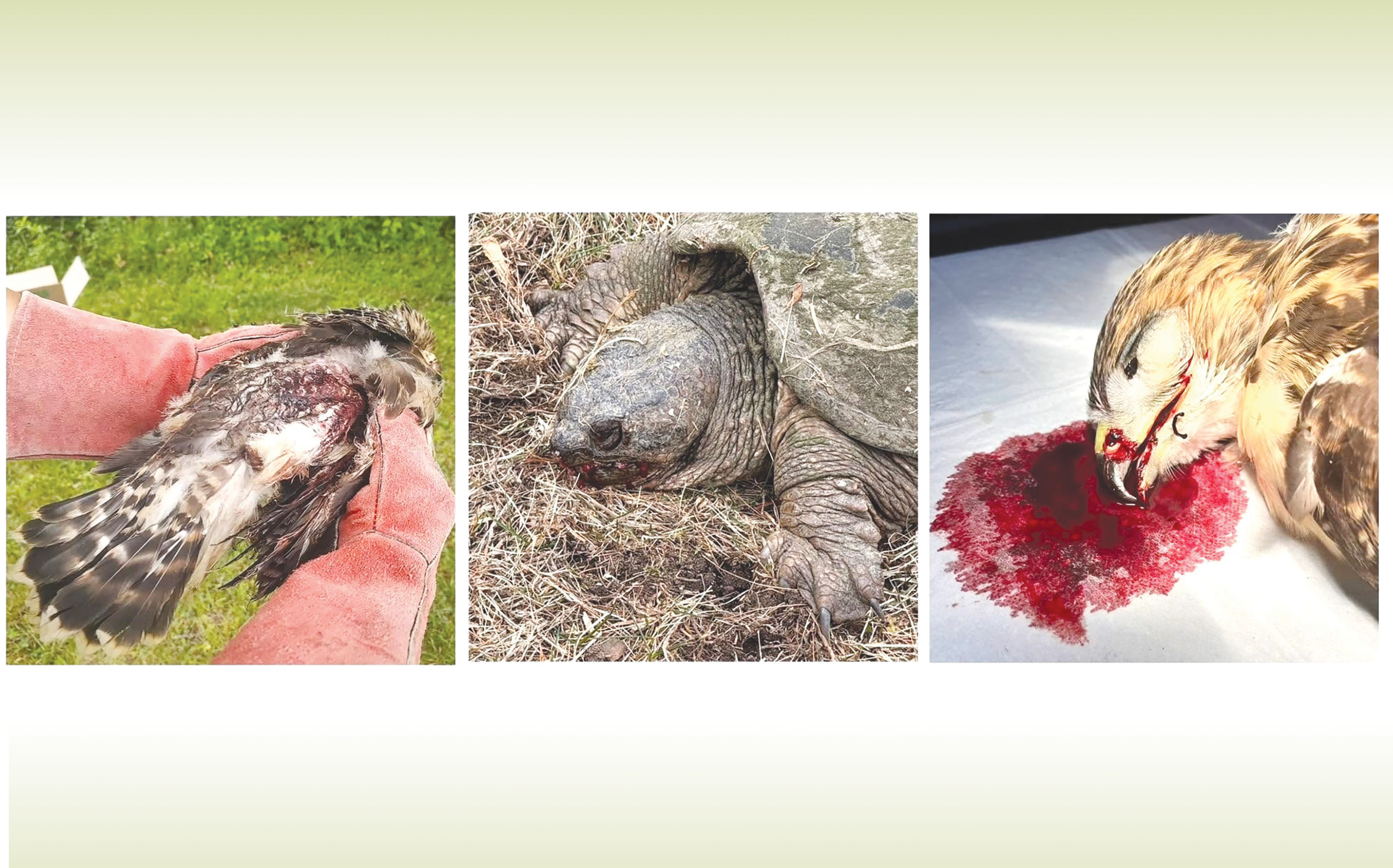
Common rodent control practices often include the use of Second-Generation Anticoagulant Rodenticides (SGAR) that are set out in baited traps indoors and outdoors, depending on the situation.
These slow-acting poisons often cause devastating accidental poisoning of pets, children and wildlife. Animals that are accidentally killed by SGARS are often the species that naturally regulate rodent populations, like owls, hawks and other common predators.
Rodent populations always rebound creating a never-ending cycle of using the poisons. This leads to the inevitable demise of the predators higher up in the food chain and that reproduce only at certain times of the year. These species do not “bounce back” the way rodents do, leading predator species to become rare or extinct in certain areas.
CT Votes For Animals (CTVA), a 501(c)4 non-profit organization that aims to create lasting protections for animals through legislative advocacy, explains that “No one benefits more from SGAR use than pest management companies” (CTVA April 2026).
In April, Newtown became the first municipality in Connecticut to prohibit the use of first and second-generation anticoagulant rodenticides on town-owned property. Just one month later, Southbury followed suit by adopting a similar policy.
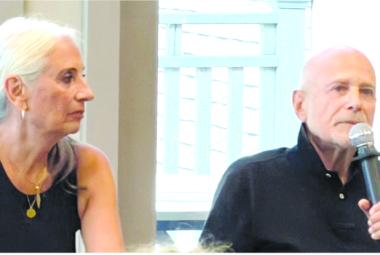
An effort is underway to help other towns adopt a prohibition of SGAR usage on town properties by volunteers Cassandra McKenna (Torrington), Lisa Shirk and Holly Kocet (Newtown), and Cynthia Rabinowitz (Bethlehem and Northwest Conservation District).
Why is banning SGAR materials important? As mentioned above, accidental poisoning of household pets and wildlife are common occurrences. Accidental poisoning of children is not as rare as we might think or want to believe. Children see the poisoned bait, which looks like candy, eat it and become mortally sick unless medical intervention can be obtained very quickly.
Use of SGARs poses a preventable health risk. They are often used around schools, parks, playgrounds and other high-traffic areas, posing a high risk of accidental exposure to children (Beuhler,M.C. et.al. (2025). 2024 annual report of the National Poison Data System ) and pets (Pet Poison Helpline 2025 report card)
In animals of all kinds and humans, anticoagulants cause death by internal bleeding. Connecticut wildlife rehabilitators report trying to rescue and treat birds of prey and mammals which are bleeding out after eating a dead rodent contaminated with the SGAR.
Safer methods of rodent control exist and do not cause the suffering animals experience from SGAR method of control. The alternative methods do not endanger prey animals. They fall within three main categories:
Exclusion: use metal mesh to seal cracks and holes leading outdoors; repair aging infrastructure to eliminate entry points; trim foliage away from buildings.
Sanitation: secure trash in containers with tight-fitting lids; increase waste collection frequency in densely populated areas; enforce proper food storage practices for restaurants and residential buildings.
Non-toxic alternatives: encourage natural predators – owl nesting boxes and hawk perches; snap traps; zap traps; CO2 traps; live traps; and ultrasonic deterrents; are just a few options.
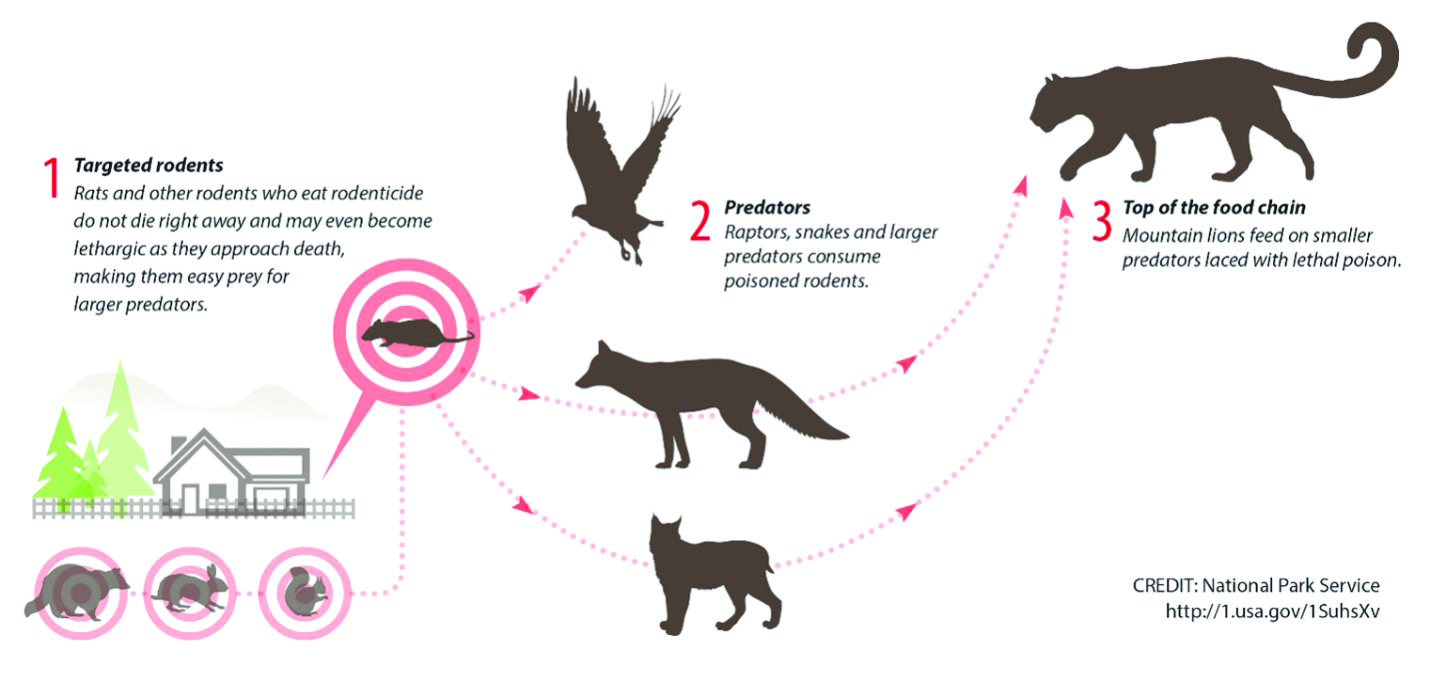
For more information on these topics visit the following websites:
• https://scienceinsights.org/safeguarding-wildlife-from-toxic-rodenticides/
A Place Called Hope, Killingworth -