The Truth About Mixed Recycling and How You Can Help
Many people misunderstand what "single-stream recycling" actually means. The term was intended to mean that all recyclable materials can go into one collection bin. Unfortunately, many people have interpreted it to mean that everything, including trash, can go into the same bin. That is absolutely not the case.
Many recycling professionals have begun using the term mixed recycling instead of single-stream recycling because it more accurately describes the system. Mixed recycling was designed to make recycling easy and convenient. Instead of separating paper, metal, cardboard, glass, and plastic into multiple containers, residents can place acceptable recyclables into one bin and wheel it to the curb or bring it to a municipal drop-off center.
Simple, right? Not exactly.
The success of mixed recycling depends entirely on what goes into the bin. Unfortunately, not everything can be recycled, even if it appears to be made from recyclable materials. Some items could theoretically be broken down and made into new products, but they cannot be effectively sorted and marketed through the recycling system.
This is where Material Recovery Facilities, known as MRFs, come in. Connecticut is home to four MRFs that sort recyclable material, bale it, and prepare it for sale into recycling markets.
And yes, recycling is real. Despite stories suggesting that recycling doesn't work or that only 5% to 7% of all plastics get recycled, the truth is more nuanced. The key phrase is "all plastics."
That figure includes countless plastic products that were never designed to be part of household recycling programs, including construction materials, PVC pipe, vehicle components, toys, appliances, and other durable goods. These products are not collected through curbside recycling.
The plastics accepted in Connecticut's residential recycling program, properly placed in a recycling bin, are marketed and recycled.
That's an important distinction.
Connecticut's Universal Recycling Guide was developed through the RecycleCT Foundation in collaboration with the state's four MRFs. The guide identifies the materials that can be successfully sorted and marketed using current recycling technology.
The guide focuses on four primary material categories:
• Plastic
• Paper
• Metal
• Glass bottles and jars
The key point is that just because something is made from a recyclable material doesn't automatically mean it belongs in the recycling bin.
A recycling system has two requirements. First, the material must be sortable. Second, there must be a market for it. A broker must be willing to buy the material, sell it to a processor, and ultimately connect it to a manufacturer that can use it to make a new product.
Without those markets, recycling simply does not happen.
Why Some Common Items Are Not Recyclable.
Take black plastic as an example.
Most MRFs sort plastics using optical scanners equipped with near-infrared technology that identifies specific resin types such as PET and HDPE. Black plastic often cannot be detected by that technology, making it difficult or impossible to sort effectively. If it cannot be sorted, it cannot be marketed.
Another example is spiral-wound containers, such as some peanut cans and refrigerated dough packaging. These packages combine layers of paperboard, foil, metal, and plastic that are bonded together. Because of that, they cannot be easily separated and marketed, and are not accepted.
One of the most common misconceptions in recycling involves the numbers inside the chasing-arrows symbol. Those numbers were never intended to tell consumers whether an item is recyclable.
They are resin identification codes created by the plastics industry to identify the chemical composition of the plastic. Today's recycling programs focus on shapes and package types, such as bottles, jugs, tubs, and lids, because those descriptions better reflect what local recycling facilities can actually process. It is best to check recycling guides instead of numbers listed on items.
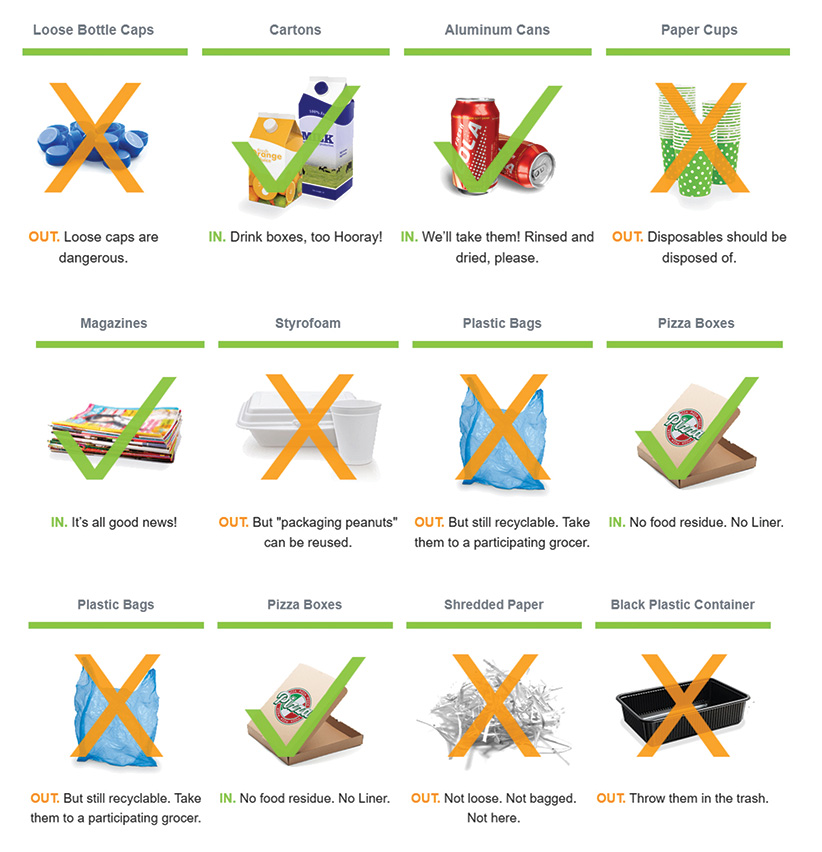
The Biggest Problems are Small Items.
• Plastic bottle caps
• Straws
• Plastic utensils
• Single use coffee pods
• Small plastic pieces
If an item is smaller than two inches, it is unlikely to be captured and recycled. Recycling systems are designed to sort larger containers and packaging. Small items fall through screening equipment and end up mixed with broken glass.
This creates what the industry calls "dirty MRF glass."
Historically, much of this contaminated glass has been used as alternative daily cover at landfills rather than being recycled into new glass products. If consumers avoided placing small loose items in recycling bins, glass quality would improve significantly and recycling opportunities would increase.
Recycling Glass is a Challenge. As glass travels from the recycling bin to collection trucks, transfer stations, and MRFs, it breaks. Those broken shards act as abrasive material, increasing wear and tear on trucks and processing equipment. Broken glass also contaminates paper and cardboard bales, reducing their value.
That's one reason the Housatonic Resources Recovery Authority (HRRA), serving 14 municipalities in western Connecticut, developed a separate collection system for glass bottles and jars.
Glass collected at local drop-off locations is transported directly to specialized recyclers. The material is transformed into new bottles, fiberglass insulation, and products such as Pozzotive, an innovative cement replacement manufactured in Connecticut from 100% post-consumer recycled glass. (See article, “CT Glass Recycler Provides Real Concrete Benefits,” The Goshen News 40th Edition, July, 2026)
That is recycling at its best: collecting materials separately, processing them efficiently, and turning them into valuable new products.
Mixed recycling remains an important part of Connecticut's waste management system. We want residents to enjoy the convenience of recycling, but convenience only works when materials are placed in the correct container.
Recycling is not a guessing game. You cannot hope that an item will be recycled simply because it looks recyclable. Even the most advanced MRF cannot magically sort materials that are not designed to be processed or marketed.
Materials that cannot be recycled don't disappear. They must be sorted out and sent for disposal, either to waste-to-energy facilities or landfills. Those costs are reflected in municipal recycling programs and private collection bills. Ultimately, residents pay for contamination through higher processing and disposal costs.
The good news is that every resident can help improve the system. The solution is not necessarily recycling more. The solution is recycling better.
Stick to the accepted materials list. Leave questionable items out. Never place batteries, propane tanks, gas cylinders, or any other pressurized containers in your recycling bin. These dangerous contaminants can cause fires, explosions, equipment damage, and serious injuries to waste and recycling workers. Consider using separate glass collection programs when available.
By recycling right, we can reduce shipping and dumping costs (lowering taxes), improve material quality, strengthen recycling markets, and ensure that more of Connecticut's recyclables become new products. Check your town’s recycling contractor list of recyclables to find what they recycle.
Recycling is something worthwhile for all.